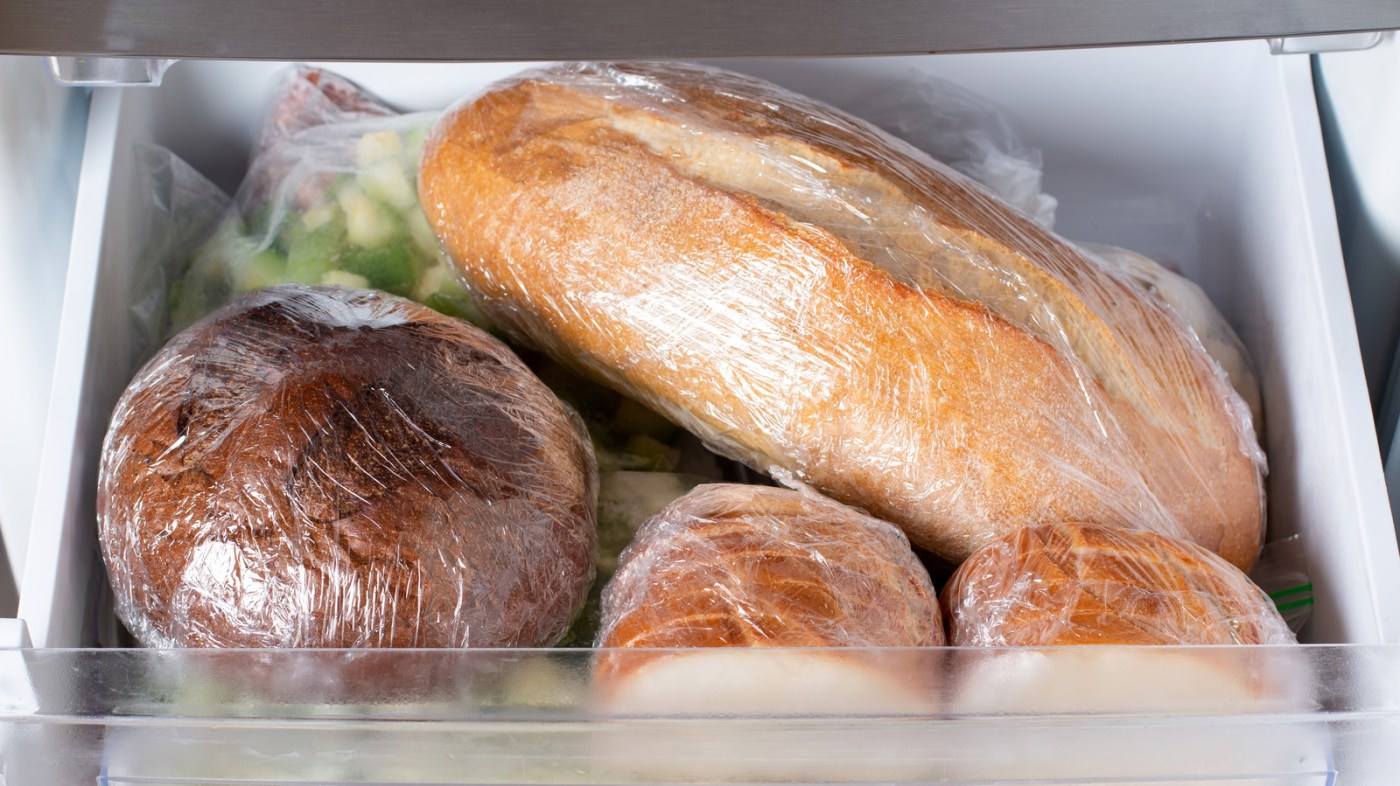
Keeping bread in the fridge makes it go stale much faster. Cold fridge temperatures speed up a process called starch retrogradation, where starch molecules crystallise and trap moisture, leaving the bread dry, hard, and crumbly. Although refrigeration can slow mould growth, it does not preserve bread’s soft texture; instead, it causes the crumb to firm up and lose its freshness. For most loaves, storing bread in a cool, dry place at room temperature is better for short-term use, while freezing it is the best option for longer storage because the low temperature pauses the staling process more effectively.
Why Refrigeration Negatively Affects Bread
- Faster staling: Fridge temperatures sit right in the sweet spot for starch molecules to recrystallise, turning soft bread firm and dry sooner than leaving it out at room temperature, where it typically stays softer for longer.
- Moisture loss: Cold air and starch crystallisation pull moisture away from the soft crumb, making the texture tough or crumbly. This gradual loss of moisture can leave the crumb noticeably drier and less tender, reducing the soft, fresh texture of the baked item.
- Worse flavour and texture: Even before mould appears, refrigerated bread loses its fresh aroma, softness, and overall eating quality. The cold environment can make the bread seem drier, firmer, and less pleasant to eat, diminishing the qualities that make it taste fresh. (While cold air does slow mould growth, it comes at the expense of texture.)
Improved Methods for Bread Storage
- Room temperature (for a few days): Keep bread in a bread bin, cool cupboard, or bag away from direct sunlight and heat sources. Store it in a dry, well-ventilated place, and avoid sealing it while it is still warm, as trapped moisture can make the crust soft and encourage mould. As BBC Bitesize notes, room temperature is best if you plan to finish the loaf within a few days.
- Freezer (for longer storage): Freeze bread if you will not eat it within a few days. Freezing slows starch crystallization and locks in freshness for longer, helping preserve the bread’s texture and flavor during storage. When you are ready to eat it, you can toast slices straight from frozen or reheat whole loaves later.
Generally, climate matters too—hot, humid weather speeds up mould growth, which is why some people still risk the fridge when their kitchen is warm or damp. In these conditions, food can spoil more quickly, especially if it is left uncovered or stored in a poorly ventilated area. Keeping ingredients sealed, reducing moisture, and maintaining a cool, dry kitchen can help slow mould growth and preserve freshness.


Leave a Reply