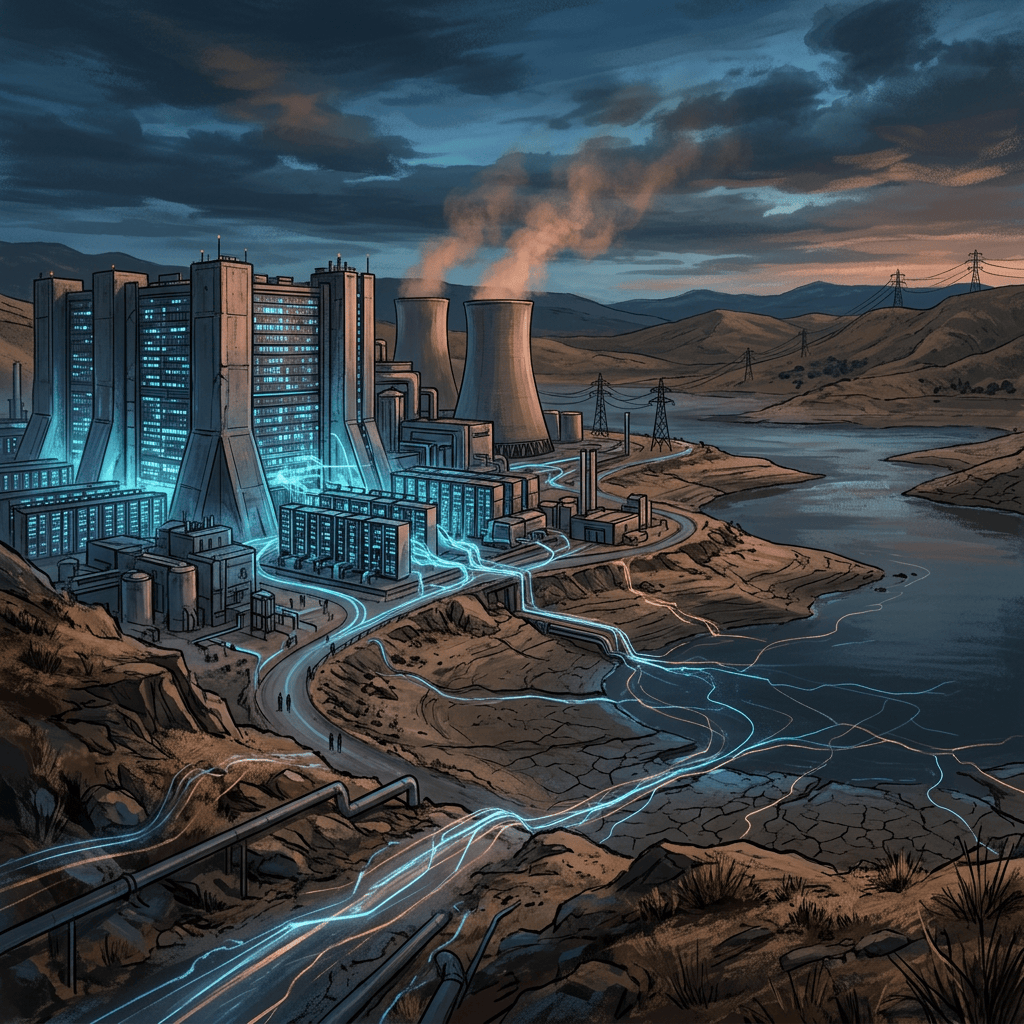
Artificial intelligence impacts water management in two major ways: by straining global freshwater supplies through data center consumption, which has become increasingly substantial due to the rise of digital technologies and cloud computing, and by optimizing crucial processes such as water treatment, leak detection, and flood forecasting.
The excessive energy requirements of data centers contribute to the depletion of already scarce water resources, highlighting the urgent need for sustainable practices in technology.
Meanwhile, AI algorithms enable the efficient monitoring and analysis of water systems, allowing for early detection of leaks that can save significant quantities of water and resources, while also improving the accuracy of flood forecasting, thereby safeguarding communities and infrastructure.
AI’s Water Footprint and Strain
- High Consumption: AI data centers consume large amounts of fresh water for cooling and power. Estimates suggest AI’s global water use could hit 4.2 to 6.6 billion cubic meters by 2027.
- Location Risks: More than half of global data centers are in areas with high water stress or pollution, which endangers local ecosystems and human access to clean water.
- Continuous Demands: AI training requires processors to run at full capacity for long periods, often weeks or months, without cooling breaks.
The Water Crisis Impact
- Local Scarcity: Most new data centres are in areas with water shortages, using up local water supplies and affecting drinking water availability.
- Vulnerable Regions: In the UK, data centre expansions in Slough and Oxfordshire risk regional supplies during dry periods.
- Lack of Transparency: Tech companies often hide AI-related environmental data, making it harder to plan local resources.
Solutions
- Alternative Cooling: Using closed-loop water systems, air cooling, and recycled greywater.
- Strategic Siting: Building facilities in cold areas or away from risky water sources.
- Regulation: Enforcing efficiency standards and required reporting for tech infrastructure.


Leave a Reply