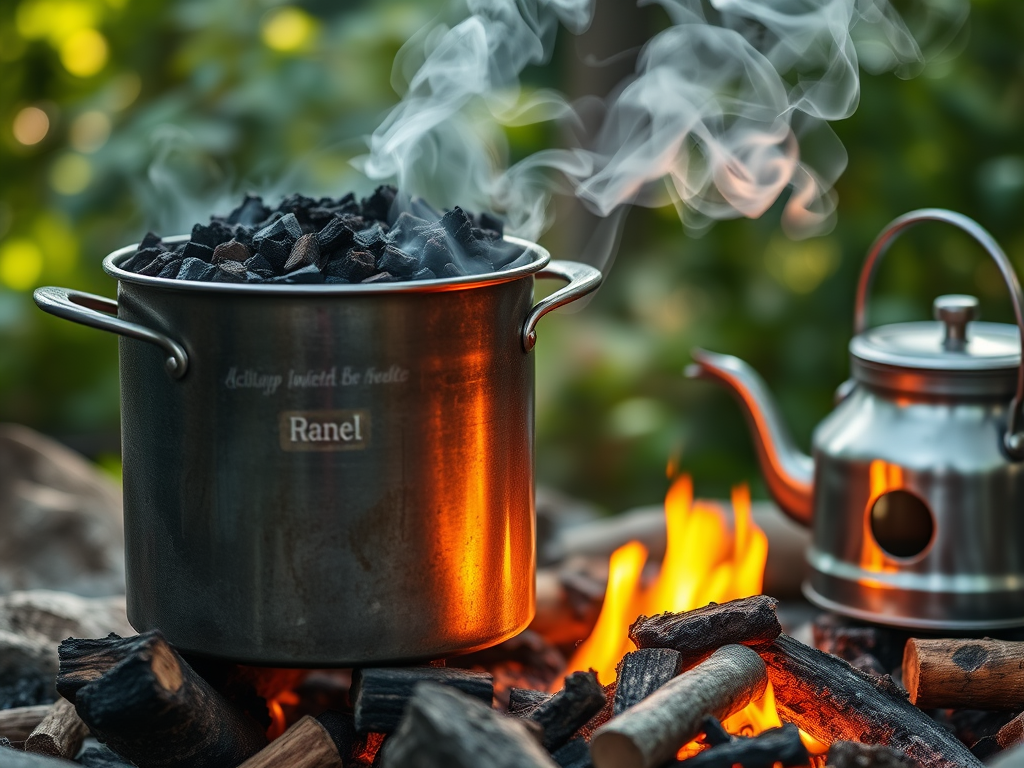
Activated charcoal, sometimes called activated carbon, is useful for purifying contaminated water or polluted air due to its highly porous structure that traps impurities effectively. In emergency situations, activated charcoal can be used to remove dangerous toxins and poisons from your body, such as those resulting from overdoses or poisoning. It is important to note that while activated charcoal is effective for certain types of toxins, it should not be relied upon for all toxic exposures and is best utilized as a first aid measure. Before you can activate the charcoal, you’ll first need to make homemade charcoal by burning wood or fibrous plant material in a well-ventilated area to mitigate the release of harmful fumes. During this process, it’s crucial to ensure that the material is completely carbonized to create a high-quality base for activation. Then you’re ready to add activating chemicals, like calcium chloride or lemon juice, which help to increase the surface area of the charcoal, enhancing its adsorption properties and making it even more effective in binding unwanted substances during the final activation process.
To construct a medium-sized fire in a secure location, one may find that an outdoor setting is most conducive to the production of activated charcoal; however, it is also permissible to utilize a fireplace indoors. It is imperative that the fire reaches a sufficient temperature to ensure the ignition of the wood components.
- Ensure that appropriate safety precautions are observed when igniting a fire and consistently maintain a fire extinguisher in close proximity.
To prepare the metal pot, fill it with small fragments of hardwood. If hardwood is not available, you can use a suitable alternative. Choose any dense, fibrous plant material, for example, coconut shells. Carefully place the hardwood pieces or selected plant material into the metal pot and then cover it with a lid.
- The lid of your pot should be equipped with a vent hole. Nevertheless, restrict airflow into the pot during this process. For example, one considers utilizing a camp cookware kettle to help the escape of air through the spout.
- The material you burn should be as dry as possible before you put it in the pot.
Clean the charcoal with water once it has cooled. The charcoal present in your pot will retain heat for a considerable duration. Allow enough time for it to cool down completely. Once it is no longer warm to the touch, transfer the carbon to a clean container. Rinse it with cool water to eliminate ash and any residual debris. Then, drain the water.
Allow the charcoal powder to air dry thoroughly. If a plastic bag was utilized, transfer the powder to a clean bowl; otherwise, it is in the mortar. In approximately 24 hours, the powder should be completely dried.
- Verify the dryness using your fingers; the powder must be completely dry prior to proceeding to the next step.
 DoctorPanie
Leave a comment