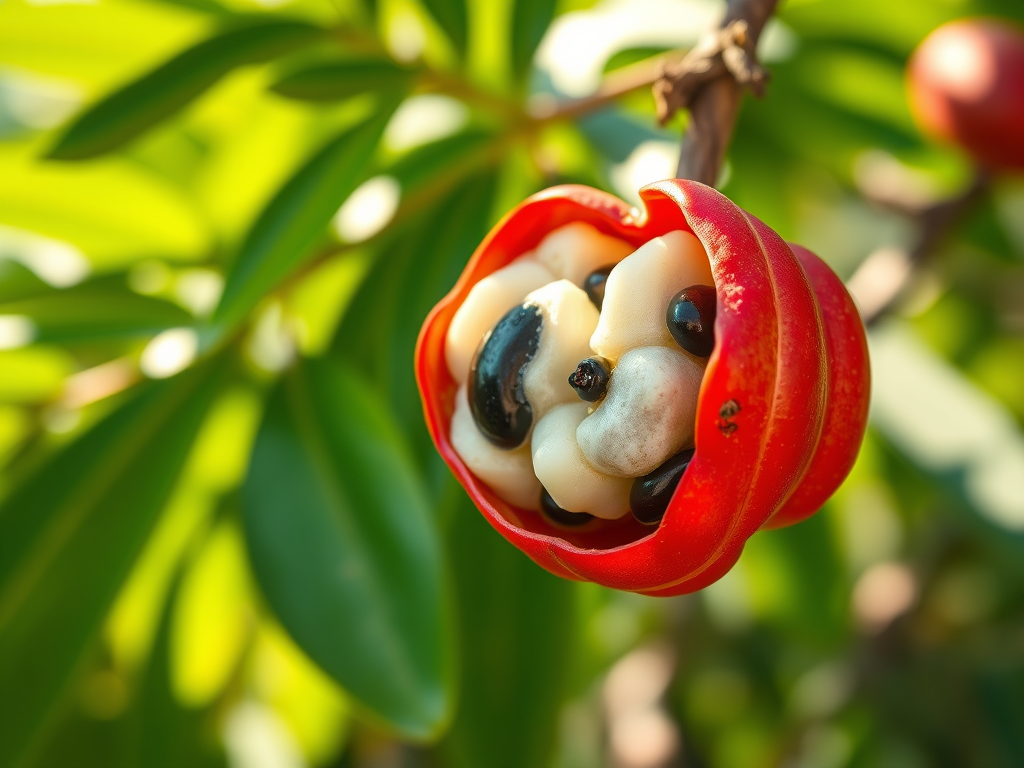
Ackee fruit grows on evergreen trees and is available year-round. It is most abundant in Jamaica, where it is esteemed as the national fruit. This fruit grows on a tropical evergreen tree found in West Africa. It is also referred to as achee, akee, and ackee apple. The fruit is fully developed and ripe for culinary use when the pods show a bright red coloration. They readily split open, revealing the edible fruit within. Jamaicans often say that the fruit will “yawn” or “smile” when it has reached the mature stage for harvesting. The pod reveals three to four cream-colored sections of flesh. These sections are known as arils and are situated beneath large, glossy black seeds. The arils represent the consumable part of the fruit. Ackee necessitates some preparation before consumption, though it is not particularly arduous. One must simply remove the black seeds from the flesh, along with the red lining shown on each section. These components should be discarded, leaving only the flesh itself. It is advisable to rinse the flesh under tap water and drain it thoroughly prior to its application in culinary endeavors.
Health Benefits Of Ackee Fruit.
Ackee fruit is rich in essential nutrients, providing several health benefits, including a high content of healthy fats, particularly omega-3 and omega-6 fatty acids, which support heart health; vitamins A and C, which enhance immune function; and potassium, which helps regulate blood pressure. Additionally, ackee contains protein and dietary fiber, contributing to digestive health and potentially aiding in weight management. However, it is essential to ensure that ackee is properly prepared, as the unripe fruit and seeds can be toxic if consumed.
 DoctorPanie
Leave a comment